Seven Nights Without Midnight Messages: A Quiet-Hours Test for Classifieds Chats
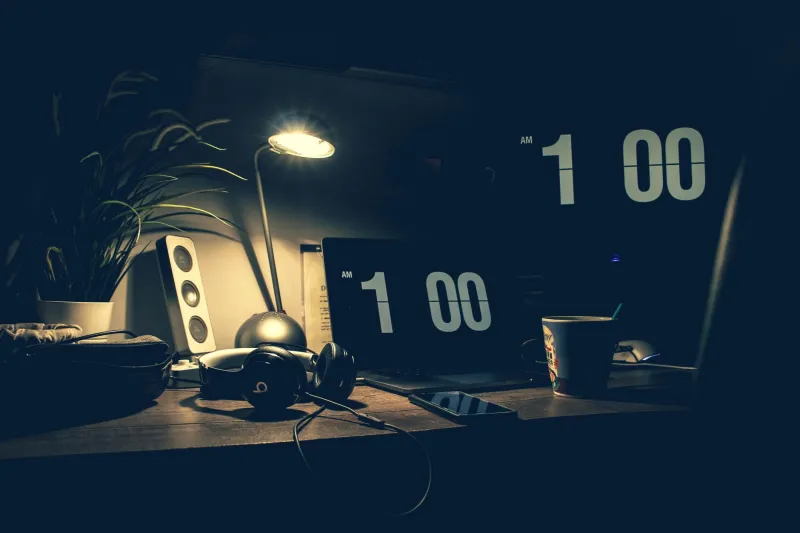
I have a bad habit that many classifieds users share: I send messages when I am tired. Not tired in a cute, vulnerable way. Tired in a 'why did I type that' way. So for seven nights in 2026, I ran a quiet-hours test. No outbound messages after 10 p.m. No replies before 8 a.m. I batched my responses into two windows—morning coffee and early evening—and I tracked what changed in my adult-classifieds chats on a site like Locanto Islamabad.
This was not a scientific study. It was an opinionated experiment with a notes app, a timer, and a few conversations that deserved better than my midnight brain.
The rules I set
The rules were simple. From 10 p.m. to 7 a.m., I did not send new messages, answer replies, or open chat threads 'just to check.' If I felt the urge, I drafted a reply and saved it. In the morning, I read it again. About half the drafts never got sent. That alone was useful data.
I also stopped treating every reply as an emergency. Classifieds culture is asynchronous by design. An ad is a little mailbox. You do not have to stand at the mailbox all night.
Nights 1 and 2: the withdrawal
The first two nights were annoying. I did not realize how much I used late-night messaging as a kind of scratch for boredom. I would open a chat, see a new reply, and feel a small hit of possibility. The quiet-hours rule made that hit harder to get.
What I noticed most was the quality of my own messages. Late-night me is flirty, vague, and a little pushy. Morning me reads the ad again and asks a real question. Evening me is better at saying what I actually want.
Nights 3 and 4: better replies, fewer of them
By midweek, my inbox was calmer. I was sending fewer messages, but the conversations that continued felt more grounded. People answered questions instead of firing off one-liners. I got fewer 'hey' messages and more 'I saw you mentioned hiking—what trail?' messages.
I also started using a short boundary script: 'I answer messages in two windows—morning and early evening. If I am slow, it is not disinterest.' That line did more for my chats than any clever opener. It set expectations without sounding cold.
Another script helped when someone pushed for an immediate reply: 'I keep late nights for sleep, not screening. Happy to pick this up tomorrow.' Most people accepted it. The ones who did not were usually the ones I would have regretted engaging with anyway.
Night 5: the safety trade-off
Here is where the experiment got complicated. Quiet hours can slow down red-flag detection. If someone sends a weird message at 11 p.m., waiting until morning means the conversation cools—or the person moves on. In adult classifieds, momentum can matter.
But the trade-off cuts both ways. Late-night urgency is a manipulation tool. Scammers and pushy people count on you being tired, lonely, or impulsive. A delayed reply gives you time to notice inconsistencies: a handle that does not match the ad, a sudden request to move off-platform, a story that shifts.
The safety benefit was not that quiet hours made bad people disappear. It was that they kept me from making decisions while I was least sharp. I stopped sending photos I had not thought about. I stopped agreeing to meetups before checking a public place and telling a friend. I stopped treating a fast reply as a sign of trust.
Night 6: batching without going cold
Batching replies has a reputation problem. It can feel like customer service. But there is a middle ground between replying instantly and disappearing for days. My evening window became the best part of the experiment. I would sit down for twenty minutes, read every message, and answer the ones that deserved it.
I borrowed a line from local ad culture: 'I am interested, but I am not in a hurry.' That sentence is not a rejection. It is a filter. It tells the other person that you are real, you are reachable, and you are not going to be pressured into a same-night decision.
Night 7: what stuck
By the seventh night, I had learned three things. First, late-night messages are often about me, not the other person. They are a way to avoid silence. Second, response quality improves when I am not trying to win a speed contest. Third, boundaries are easier to keep when they are boring and stated in advance.
I did lose a few conversations. Some people wanted a 1 a.m. back-and-forth, and I was not available. That is fine. The chats that survived were better, and I felt less like I was performing availability.
What U.S. daters can borrow
You do not need to run a seven-night experiment to use the idea. Pick a quiet-hours window that fits your life—maybe 10 p.m. to 7 a.m., maybe 11 p.m. to 8 a.m. Tell people once, plainly, that you batch replies. Then watch what changes.
If you are using classifieds-style personals in the U.S., the discipline is especially useful. Local ad culture is not a live feed. It is a slow inbox. Treat it that way, and you will make fewer tired decisions, send fewer messages you regret, and give the good conversations room to breathe.
The quiet hours test did not make me a different person. It made me a slightly better correspondent. In adult classifieds, that is not a small thing. It is the whole game.